Since its appearance on the Formula 1 World Championship calendar in 1986, the Hungarian Grand Prix, contested on the Hungaroring near Budapest, has become one of the season’s must-see events. With its narrow track, often sweltering conditions and unique atmosphere, it is both a technical challenge and a popular celebration in the heart of Central Europe’s most beautiful capital.
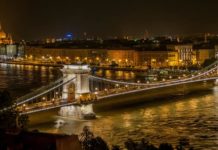
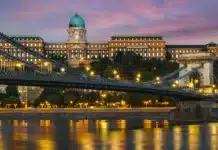
Each summer, as Formula 1 inches toward its mid-season break, a special kind of excitement invades the banks of the Danube. In Budapest, Hungary’s vibrant capital, the roar of Hungarian Grand Prix Formula 1 engines merges with the hum of trams along the Danube, the sounds of violins drifting from open-air cafés, and the whispers of steam rising from historic thermal baths. For a few electric days, this elegant capital becomes the high-speed stage for one of the most distinctive Grands Prix on the calendar.
The Hungaroring: a circuit with a unique character
Nestled in a natural bowl in Mogyoród, just 20 kilometers from Budapest, the Hungaroring is a purpose-built racing circuit that first hosted Formula 1 in 1986. It was the first Grand Prix held behind the Iron Curtain — a historic step that introduced Western motorsport to the Eastern Bloc, drawing an enormous crowd and massive interest.
Measuring 4.381 kilometers (2.722 miles) and composed of 14 turns, the Hungaroring is often compared to Monaco — but without the walls. Its narrow, twisty layout allows little room for error and even less room for overtaking, meaning qualifying position and pit strategy are often decisive. High downforce setups are required, and drivers must maintain relentless focus through the circuit’s constantly changing rhythm of corners.
The Hungaroring itself, shaped like a natural amphitheatre, provides excellent views from the stands — allowing spectators to see multiple parts of the track from a single vantage point, amplifying the sense of drama and immersion.
Adding to the challenge is the weather: held in the height of summer, the Grand Prix is often run in sweltering heat, with track temperatures soaring above 50°C (122°F), putting cars, tyres, and drivers to the test.
Discover the Hungaroring circuit in video on this link.
A Capital Experience: the Budapest factor
Part of what makes the Hungarian Grand Prix so special is its setting. Budapest is a city that charms at every turn: from its grand boulevards and baroque architecture to its lively ruin pubs and world-famous spas. For teams, fans, and drivers, the Grand Prix weekend is as much a cultural event as a sporting one.
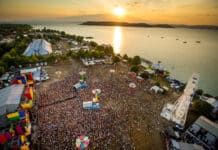
With its central location in Europe, Budapest also attracts a diverse and passionate fanbase from across the continent: Germans, Austrians, Poles, Dutch, and of course, Hungarians, all bringing flags, flares, and an infectious energy to the event.
Historic Moments on the Hungarian Grand Prix
Over nearly four decades, the Hungarian Grand Prix has delivered countless memorable races, upset victories, and historic milestones. Some of the most iconic moments include:
-
1986: A historic debut
The inaugural Hungarian Grand Prix was won by Nelson Piquet after a fierce battle with Ayrton Senna. It was the first time F1 raced in a communist country, a monumental occasion for the sport’s global expansion. -
1997: Almost a miracle for Damon Hill
In one of the most astonishing performances in F1 history, Damon Hill nearly won the race in an underpowered Arrows-Yamaha, only to suffer a mechanical failure on the final lap. He still finished second, and the drive remains legendary. -
2003: Fernando Alonso’s first win
A young Fernando Alonso claimed his maiden victory here, becoming the youngest race winner at the time and setting the stage for a brilliant career. -
2006: Button’s breakthrough in the rain
Jenson Button scored his first F1 win in a chaotic wet-dry race, mastering the changing conditions in spectacular fashion. -
2021: Esteban Ocon’s stunning victory
A first-lap crash took out several contenders, and Alpine’s Esteban Ocon seized the opportunity to win his first Grand Prix, holding off Sebastian Vettel in a dramatic strategic battle.
The Importance of Strategy and Precision
Due to the circuit’s difficulty for overtaking, the Hungarian Grand Prix often hinges on strategic brilliance and pit lane execution. Drivers must manage tyre wear carefully, and teams must choose their moments with surgical precision. Under or overcut strategies frequently play a defining role, and track position can be more valuable here than pure pace.
As the final race before the traditional summer break, it also serves as a psychological checkpoint: teams look to head into August on a high, and underperformers feel the pressure mounting to deliver.
Records and Legends of Hungarian Grand Prix
-
Most Wins: Lewis Hamilton stands as the undisputed master of the Hungaroring with 8 victories, more than any other driver at any single venue.
-
Most Pole Positions: Also Hamilton, with multiple poles, though Ayrton Senna and Michael Schumacher also shone here in their prime.
-
Winning from Pole: Because overtaking is difficult, pole position frequently converts into a race win — though not always.
McLaren, Mercedes, Ferrari, and Red Bull have all enjoyed periods of dominance at the track, showcasing its neutrality and balance.
A Bright Future in the Heart of Europe
The Hungarian Grand Prix has remained a staple of the Formula 1 calendar for nearly 40 years, and in 2023, Formula 1 confirmed a contract extension keeping the race on the schedule until at least 2032. Plans are also underway to upgrade the Hungaroring’s facilities, with a focus on sustainability, improved fan amenities, and a more modern paddock — all while maintaining the circuit’s beloved character.
With Formula 1’s popularity surging globally, the Hungarian Grand Prix is poised to continue its tradition of thrilling summer drama, blending the old and the new in unforgettable fashion.
The Hungarian Grand Prix is a race of contrasts: technical yet emotional, strategic yet unpredictable, historic yet ever-evolving. But more than anything, it’s a celebration of motorsport, of summer, and of one of Europe’s most enchanting cities. In Budapest, Formula 1 doesn’t just race, it comes alive!